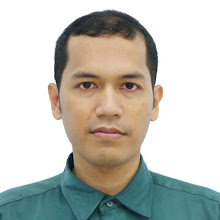
"The notion that science can improve health has been borne out in Islam for many centuries. There is a clear belief that through knowledge you can improve not just medicine, but the lot of man.
"I was born in Algeria, in a small town called Nidroma. I became very interested in medicine because I had an uncle who was a radiologist.
"I came to America in 1975, and everybody said, 'Johns Hopkins is the real Mecca of medicine, if you could go there, you'd do great.' I was totally embraced by the people there, my professors. Everybody told me, 'We're all immigrants here, we're all from different places, and we all meld together.'
"The mission of the National Institutes of Health is to advance knowledge about medical care and diseases that affect mankind. There are 18,000 people working here in Washington, and 45,000 projects that the institute funds throughout the world.
"When we develop a vaccine, it is made available worldwide. When we develop a new treatment, it is available worldwide. So it impacts on the health of everyone on earth.
"I was nominated to this position by President George Bush and confirmed by the United States Senate. What I can tell Muslims around the world is, I don't think there is any other country in the world where different people from different countries are as accepted and welcomed as members of a society and as good citizens."

Sabtu, 29 Maret 2008


Adam Smith
Adam Smith FRSE (baptised June 5 (OS) / June 16 (NS) 1723 – July 17, 1790) was a Scottish moral philosopher and a pioneering political economist. He is a major contributor to the modern perception of free market economics. One of the key figures of the intellectual movement known as the Scottish Enlightenment, he is known primarily as the author of two treatises: The Theory of Moral Sentiments (1759), and An Inquiry into the Nature and Causes of the Wealth of Nations (1776). The latter was one of the earliest attempts to systematically study the historical development of industry and commerce in Europe, as well as a sustained attack on the doctrines of mercantilism. Smith's work helped to build the foundation of the modern academic discipline of free market economics and provided one of the best-known intellectual rationales for free trade, capitalism, and libertarianism.
Career in Edinburgh and Glasgow
In 1748 Smith began delivering public lectures in Edinburgh under the patronage of the Lord Kames. Some of these dealt with rhetoric and belles-lettres, but later he took up the subject of "the progress of opulence," and it was then, in his middle or late 20s, that he first expounded the economic philosophy of "the obvious and simple system of natural liberty" which he was later to proclaim to the world in his Wealth of Nations. In about 1750 he met the philosopher David Hume, who was his senior by over a decade. The alignments of opinion that can be found within the details of their respective writings covering history, politics, philosophy, economics, and religion indicate that they both shared a closer intellectual alliance and friendship than with the others who were to play important roles during the emergence of what has come to be known as the Scottish Enlightenment[2]; he frequented The Poker Club of Edinburgh.
In 1751 Smith was appointed chair of logic at the University of Glasgow, transferring in 1752 to the Chair of Moral Philosophy, once occupied by his famous teacher, Francis Hutcheson. His lectures covered the fields of ethics, rhetoric, jurisprudence, political economy, and "police and revenue". In 1759 he published his The Theory of Moral Sentiments, embodying some of his Glasgow lectures. This work, which established Smith's reputation in his day, was concerned with how human communication depends on sympathy between agent and spectator (that is, the individual and other members of society). His analysis of language evolution was somewhat superficial, as shown only 14 years later by a more rigorous examination of primitive language evolution by Lord Monboddo in his Of the Origin and Progress of Language[3]. Smith's capacity for fluent, persuasive, if rather rhetorical argument, is much in evidence. He bases his explanation not, as the third Lord Shaftesbury and Hutcheson had done, on a special "moral sense"; nor, as Hume did, on utility; but on sympathy.
Smith now began to give more attention to jurisprudence and economics in his lecture and less to his theories of morals. An impression can be obtained as to the development of his ideas on political economy from the notes of his lectures taken down by a student in about 1763 which were later edited by Edwin Cannan[4], and from what Scott, its discoverer and publisher, describes as "An Early Draft of Part of The Wealth of Nations", which he dates about 1763. Cannan's work appeared as Lectures on Justice, Police, Revenue and Arms. A fuller version was published as Lectures on Jurisprudence in the Glasgow Edition of 1776.
Career in Edinburgh and Glasgow
In 1748 Smith began delivering public lectures in Edinburgh under the patronage of the Lord Kames. Some of these dealt with rhetoric and belles-lettres, but later he took up the subject of "the progress of opulence," and it was then, in his middle or late 20s, that he first expounded the economic philosophy of "the obvious and simple system of natural liberty" which he was later to proclaim to the world in his Wealth of Nations. In about 1750 he met the philosopher David Hume, who was his senior by over a decade. The alignments of opinion that can be found within the details of their respective writings covering history, politics, philosophy, economics, and religion indicate that they both shared a closer intellectual alliance and friendship than with the others who were to play important roles during the emergence of what has come to be known as the Scottish Enlightenment[2]; he frequented The Poker Club of Edinburgh.
In 1751 Smith was appointed chair of logic at the University of Glasgow, transferring in 1752 to the Chair of Moral Philosophy, once occupied by his famous teacher, Francis Hutcheson. His lectures covered the fields of ethics, rhetoric, jurisprudence, political economy, and "police and revenue". In 1759 he published his The Theory of Moral Sentiments, embodying some of his Glasgow lectures. This work, which established Smith's reputation in his day, was concerned with how human communication depends on sympathy between agent and spectator (that is, the individual and other members of society). His analysis of language evolution was somewhat superficial, as shown only 14 years later by a more rigorous examination of primitive language evolution by Lord Monboddo in his Of the Origin and Progress of Language[3]. Smith's capacity for fluent, persuasive, if rather rhetorical argument, is much in evidence. He bases his explanation not, as the third Lord Shaftesbury and Hutcheson had done, on a special "moral sense"; nor, as Hume did, on utility; but on sympathy.
Smith now began to give more attention to jurisprudence and economics in his lecture and less to his theories of morals. An impression can be obtained as to the development of his ideas on political economy from the notes of his lectures taken down by a student in about 1763 which were later edited by Edwin Cannan[4], and from what Scott, its discoverer and publisher, describes as "An Early Draft of Part of The Wealth of Nations", which he dates about 1763. Cannan's work appeared as Lectures on Justice, Police, Revenue and Arms. A fuller version was published as Lectures on Jurisprudence in the Glasgow Edition of 1776.
Adidas
Adidas AG (ISIN: DE0005003404) is a German sports apparel manufacturer, part of the Adidas Group, which is the second largest sportswear manufacturer worldwide. The company was named after its founder, Adolf (Adi) Dassler, who started producing shoes in the 1920s in Herzogenaurach near Nuremberg with the help of his brother Rudolf Dassler who later formed rival shoe company PUMA AG. It registered as adidas AG on 18 August 1949 (with lower-case lettering). The company's clothing and shoe designs typically feature three parallel stripes, and this same motif is incorporated into Adidas's current official logo. The company revenue for 2005 was listed at 6.6 billion euro, or about 8.4 billion U.S. dollars.
Adidas perfumery and personal care products are manufactured by Coty, Inc. under license worldwide.
Adidas perfumery and personal care products are manufactured by Coty, Inc. under license worldwide.
Affordable Call Centers for Small Businesses
Outsourcing has turned so many services into commodities that the personal touch that used to distinguish one business among its competitors is rarer today than it has ever been. Consequently, that personal touch is also, perhaps, more crucial than ever for a business that wants to pull ahead in a competitive marketplace.
Delivering that “personal touch” may not necessarily mean that your own employees are responsible for all the contact your company makes with customers. If you choose wisely, you can get a fully outsourced call center service that can uphold your standards for good customer interaction.
You may also decide to develop your call center services in-house, in which case you can support your customer service or sales staff with technology that helps to route calls, offer multiple ways to interact with customers, and manage the information your customers provide. As a third approach to setting up your company’s call center, you may choose a hybrid option, relying partly on outsourced services and partly on your own call center system and personnel to take care of all your customer contact.
The good news for small businesses is that there are affordable tools and services in all these call center options. “Call centers are no longer formal, complex, and expensive solutions only for those with dedicated agents,” says Michael Margolis, chief technical officer for SMB solutions at telecommunications equipment manufacturer Avaya, based in Basking Ridge, N.J. “Managing communications — and integrating the management of that information along with other aspects of customer relations, including customer history — is now available to businesses of any size at a fraction of the cost from 5 to 10 years ago.
This buyer’s guide explains the functions that come with call centers, introducing the special functions that make a contact center different from the traditional phone-only interaction of the traditional call center. We explain the different levels of call center service and technology, from fully outsourced solutions to the software and hardware that will allow you to set up your own in-house contact center.
When you get the information you need to start shopping, we can help you get bids from targeted, qualified vendors. You fill out a questionnaire and our partner, BuyerZone, can match you with companies that can tell you more about their offerings. You can check out the following bid request forms:
call center services,
telemarketing services
call center software
IVR (interactive voice response) systems
If you already have a sales or service staff and are looking for ways to make their job easier while smoothing out your service, read an overview of the components that make contact centers such powerful tools in the What Is a Contact Center? section of this guide. You can also skip to the more detailed discussion of call center technology.
If you’re investigating call center options for a short-term project, you will probably be interested in the discussion of call center outsourcing options.
Our guide touches on the choices available for outbound call centers, but you can get more in-depth information about telemarketing options in the Buyer’s Guide to Telemarketing Services.
Delivering that “personal touch” may not necessarily mean that your own employees are responsible for all the contact your company makes with customers. If you choose wisely, you can get a fully outsourced call center service that can uphold your standards for good customer interaction.
You may also decide to develop your call center services in-house, in which case you can support your customer service or sales staff with technology that helps to route calls, offer multiple ways to interact with customers, and manage the information your customers provide. As a third approach to setting up your company’s call center, you may choose a hybrid option, relying partly on outsourced services and partly on your own call center system and personnel to take care of all your customer contact.
The good news for small businesses is that there are affordable tools and services in all these call center options. “Call centers are no longer formal, complex, and expensive solutions only for those with dedicated agents,” says Michael Margolis, chief technical officer for SMB solutions at telecommunications equipment manufacturer Avaya, based in Basking Ridge, N.J. “Managing communications — and integrating the management of that information along with other aspects of customer relations, including customer history — is now available to businesses of any size at a fraction of the cost from 5 to 10 years ago.
This buyer’s guide explains the functions that come with call centers, introducing the special functions that make a contact center different from the traditional phone-only interaction of the traditional call center. We explain the different levels of call center service and technology, from fully outsourced solutions to the software and hardware that will allow you to set up your own in-house contact center.
When you get the information you need to start shopping, we can help you get bids from targeted, qualified vendors. You fill out a questionnaire and our partner, BuyerZone, can match you with companies that can tell you more about their offerings. You can check out the following bid request forms:
call center services,
telemarketing services
call center software
IVR (interactive voice response) systems
If you already have a sales or service staff and are looking for ways to make their job easier while smoothing out your service, read an overview of the components that make contact centers such powerful tools in the What Is a Contact Center? section of this guide. You can also skip to the more detailed discussion of call center technology.
If you’re investigating call center options for a short-term project, you will probably be interested in the discussion of call center outsourcing options.
Our guide touches on the choices available for outbound call centers, but you can get more in-depth information about telemarketing options in the Buyer’s Guide to Telemarketing Services.
Competition with Boeing
For a comparison of Airbus A350 and Boeing 787 orders, click here.
For a comparison of Airbus A380 and Boeing 747-8 orders, click here.
Airbus is in tight competition with Boeing every year for aircraft orders. Though both manufacturers have a broad product range in various segments from single-aisle to wide-body, both manufacturers' offerings do not always compete head-to-head. Instead they respond with models a bit smaller or a bit bigger than the other in order to plug any holes in demand and achieve a better edge. The A380, for example, is designed to be a bit bigger than the 747. The A350XWB competes with the high end of the 787 and the low end of the 777. The A320 is bigger than the 737-700 but smaller than the 737-800. The A321 is bigger than the 737-900 but smaller than the previous 757-200. Airlines also see this as a benefit since they get a more complete product range from 100 seats to 500 seats than if both companies offered identical aircraft.
In recent years the Boeing 777 has outsold its Airbus counterparts, which include the A340 family as well as the A330-300. The smaller A330-200 competes with the 767, outselling its Boeing counterpart. The A380 is anticipated to further reduce sales of the Boeing 747, gaining Airbus a share of the market in very large aircraft. Boeing is building a stretched version of the 747, the 747-8, which will provide increased competition for the A380.
There are around 3,850 Airbus aircraft in service, with Airbus winning more than 50 per cent of aircraft orders in recent years. Airbus products are still outnumbered 6 to 1 by in-service Boeings (there are over 5,000 Boeing 737s alone in service). This however is indicative of historical success - Airbus made a late entry into the modern jet airliner market (1972 vs. 1958 for Boeing).
Airbus won a greater share of orders in 2003, 2004. It also delivered more aircraft in 2003, 2004, 2005 & 2006.
In 2005, Airbus made a claim to victory again with 1111 (1055 net)[18], compared to 1029 (net of 1002) for Boeing[18] However, Boeing won 55% of 2005 orders by value, due to that firm winning several important widebody sales at the expense of Airbus.
In 2006 Boeing won more orders by both measures.
[edit] Subsidies
Boeing has continually protested over "launch aid" and other forms of government aid to Airbus, while Airbus has argued that Boeing receives illegal subsidies through military and research contracts and tax breaks.
In July 2004 Harry Stonecipher (then-Boeing CEO) accused Airbus of abusing a 1992 bilateral EU-US agreement providing for disciplines for large civil aircraft support from governments. Airbus is given reimbursable launch investment (RLI, called "launch aid" by the US) from European governments with the money being paid back with interest, plus indefinite royalties, but only if the aircraft is a commercial success[18]. Airbus contends that this system is fully compliant with the 1992 agreement and WTO rules. The agreement allows up to 33 per cent of the programme cost to be met through government loans which are to be fully repaid within 17 years with interest and royalties. These loans are held at a minimum interest rate equal to the cost of government borrowing plus 0.25%, which would be below market rates available to Airbus without government support[18]. Airbus claims that since the signature of the EU-U.S. Agreement in 1992, it has repaid European governments more than U.S.$6.7 billion and that this is 40% more than it has received.[18].
Airbus argues that the pork barrel military contracts awarded to Boeing (the second largest U.S. defence contractor) are in effect a form of subsidy (see the Boeing KC-767 military contracting controversy). The significant U.S. government support of technology development via NASA also provides significant support to Boeing, as does the large tax breaks offered to Boeing which some claim are in violation of the 1992 agreement and WTO rules. In its recent products such as the 787, Boeing has also been offered substantial support from local and state governments[19]. However it has been argued that in U.S. government support of technology development, anyone can benefit from the results; even Airbus can benefit from them.
In January 2005 the European Union and United States trade representatives, Peter Mandelson and Robert Zoellick (since replaced by Rob Portman) respectively, agreed to talks aimed at resolving the increasing tensions. These talks were not successful with the dispute becoming more acrimonious rather than approaching a settlement.
[edit] World Trade Organization litigation
On 31 May 2005 the United States filed a case against the European Union for providing allegedly illegal subsidies to Airbus. Twenty-four hours later the European Union filed a complaint against the United States protesting support for Boeing.[18]
Portman (from the USA) and Mandelson (from the EU) issued a joint statement stating: "We remain united in our determination that this dispute shall not affect our cooperation on wider bilateral and multilateral trade issues. We have worked together well so far, and intend to continue to do so."
Tensions increased by the support for the Airbus A380 have erupted into a potential trade war due to the upcoming launch of the Airbus A350. Airbus would ideally like the A350 programme to be launched with the help of state loans covering a third of the development costs although it has stated it will launch without these loans if required. The A350 will compete with Boeing's most successful project in recent years, the 787 Dreamliner.
EU trade officials are questioning the funding provided by NASA, the Department of Defense (in particular in the form of R&D contracts that benefited Boeing) as well as funding from US states (in particular the State of Washington, the State of Kansas and the State of Illinois) for the launch of Boeing aircraft, in particular the 787.
For a comparison of Airbus A380 and Boeing 747-8 orders, click here.
Airbus is in tight competition with Boeing every year for aircraft orders. Though both manufacturers have a broad product range in various segments from single-aisle to wide-body, both manufacturers' offerings do not always compete head-to-head. Instead they respond with models a bit smaller or a bit bigger than the other in order to plug any holes in demand and achieve a better edge. The A380, for example, is designed to be a bit bigger than the 747. The A350XWB competes with the high end of the 787 and the low end of the 777. The A320 is bigger than the 737-700 but smaller than the 737-800. The A321 is bigger than the 737-900 but smaller than the previous 757-200. Airlines also see this as a benefit since they get a more complete product range from 100 seats to 500 seats than if both companies offered identical aircraft.
In recent years the Boeing 777 has outsold its Airbus counterparts, which include the A340 family as well as the A330-300. The smaller A330-200 competes with the 767, outselling its Boeing counterpart. The A380 is anticipated to further reduce sales of the Boeing 747, gaining Airbus a share of the market in very large aircraft. Boeing is building a stretched version of the 747, the 747-8, which will provide increased competition for the A380.
There are around 3,850 Airbus aircraft in service, with Airbus winning more than 50 per cent of aircraft orders in recent years. Airbus products are still outnumbered 6 to 1 by in-service Boeings (there are over 5,000 Boeing 737s alone in service). This however is indicative of historical success - Airbus made a late entry into the modern jet airliner market (1972 vs. 1958 for Boeing).
Airbus won a greater share of orders in 2003, 2004. It also delivered more aircraft in 2003, 2004, 2005 & 2006.
In 2005, Airbus made a claim to victory again with 1111 (1055 net)[18], compared to 1029 (net of 1002) for Boeing[18] However, Boeing won 55% of 2005 orders by value, due to that firm winning several important widebody sales at the expense of Airbus.
In 2006 Boeing won more orders by both measures.
[edit] Subsidies
Boeing has continually protested over "launch aid" and other forms of government aid to Airbus, while Airbus has argued that Boeing receives illegal subsidies through military and research contracts and tax breaks.
In July 2004 Harry Stonecipher (then-Boeing CEO) accused Airbus of abusing a 1992 bilateral EU-US agreement providing for disciplines for large civil aircraft support from governments. Airbus is given reimbursable launch investment (RLI, called "launch aid" by the US) from European governments with the money being paid back with interest, plus indefinite royalties, but only if the aircraft is a commercial success[18]. Airbus contends that this system is fully compliant with the 1992 agreement and WTO rules. The agreement allows up to 33 per cent of the programme cost to be met through government loans which are to be fully repaid within 17 years with interest and royalties. These loans are held at a minimum interest rate equal to the cost of government borrowing plus 0.25%, which would be below market rates available to Airbus without government support[18]. Airbus claims that since the signature of the EU-U.S. Agreement in 1992, it has repaid European governments more than U.S.$6.7 billion and that this is 40% more than it has received.[18].
Airbus argues that the pork barrel military contracts awarded to Boeing (the second largest U.S. defence contractor) are in effect a form of subsidy (see the Boeing KC-767 military contracting controversy). The significant U.S. government support of technology development via NASA also provides significant support to Boeing, as does the large tax breaks offered to Boeing which some claim are in violation of the 1992 agreement and WTO rules. In its recent products such as the 787, Boeing has also been offered substantial support from local and state governments[19]. However it has been argued that in U.S. government support of technology development, anyone can benefit from the results; even Airbus can benefit from them.
In January 2005 the European Union and United States trade representatives, Peter Mandelson and Robert Zoellick (since replaced by Rob Portman) respectively, agreed to talks aimed at resolving the increasing tensions. These talks were not successful with the dispute becoming more acrimonious rather than approaching a settlement.
[edit] World Trade Organization litigation
On 31 May 2005 the United States filed a case against the European Union for providing allegedly illegal subsidies to Airbus. Twenty-four hours later the European Union filed a complaint against the United States protesting support for Boeing.[18]
Portman (from the USA) and Mandelson (from the EU) issued a joint statement stating: "We remain united in our determination that this dispute shall not affect our cooperation on wider bilateral and multilateral trade issues. We have worked together well so far, and intend to continue to do so."
Tensions increased by the support for the Airbus A380 have erupted into a potential trade war due to the upcoming launch of the Airbus A350. Airbus would ideally like the A350 programme to be launched with the help of state loans covering a third of the development costs although it has stated it will launch without these loans if required. The A350 will compete with Boeing's most successful project in recent years, the 787 Dreamliner.
EU trade officials are questioning the funding provided by NASA, the Department of Defense (in particular in the form of R&D contracts that benefited Boeing) as well as funding from US states (in particular the State of Washington, the State of Kansas and the State of Illinois) for the launch of Boeing aircraft, in particular the 787.
Airbus
Airbus S.A.S. is the aircraft manufacturing subsidiary of EADS N.V., a pan-European aerospace concern. Based at Toulouse, France with significant operations in other European states, Airbus produces around half of the world's jet airliners, with most of the rest built by rival Boeing Commercial Airplanes, though the precise share varies on an annual basis.
Airbus was incorporated in 2001 under French law as a simplified joint stock company or S.A.S. (Société par Actions Simplifiée). Airbus was formerly known as Airbus Industrie. The name is pronounced /ˈɛəbʌs/ in British English, /ɛʁbys/ in French, and /ˈɛːɐbʊs/ in German.
Airbus was jointly held by EADS (80%) and BAE Systems (20%), Europe's two largest defence contractors. BAE Systems announced its intention to sell its 20% share of Airbus in April 2006 and exercised its put option in June 2006 to force EADS to buy the stake. The put option appointed investment bank Rothschild to establish an independent valuation. Rothschild's valuation, reported in 2006, was £1.9 billion (€2.75 billion), well below the expecations of BAE and EADS. Unhappy with the valuation, BAE appointed independent auditors to investigate the value of its 20% share. [2] On 6 September 2006 the BAE board announced it would recommend to shareholders to sell its share for €2.75bn (£1.87bn or $3.53bn). [3]
Airbus employs around 57,000 people at sixteen sites in four European countries: Germany, France, the United Kingdom, and Spain. Final assembly production occurs at Toulouse (France) and Hamburg (Germany). Airbus also has three subsidiaries in the USA, Japan and China.
[edit] History
A340-600 at Farnborough Air Show, 2006.
Airbus Industrie began as a consortium of European aviation firms to compete with American companies such as Boeing, McDonnell Douglas, and Lockheed. In the 1960s European aircraft manufacturers competed with each other as much as the American giants. In the mid-1960s tentative negotiations commenced regarding a European collaborative approach.
In September 1967 the German, French and British governments signed a Memorandum of Understanding (MoU) to start development of the 300 seat Airbus A300. This was the second major joint aircraft programme in Europe, following the Concorde, for which no ongoing consortium was devised. An earlier announcement had been made in July 1967 but had been complicated by the British Aircraft Corporation (BAC). The British government refused to back its proposed competitor, a development of the BAC 1-11 and instead supported the Airbus aircraft.
In the months following this agreement both the French and British governments expressed doubts about the aircraft. Another problem was the requirement for a new engine (to be developed by Rolls-Royce, the RB207). In December 1968 the French and British partner companies, Sud Aviation and Hawker Siddeley proposed a revised configuration, the 250 seat Airbus A250. Renamed the A300B the aircraft would not require new engines, reducing development costs.
In 1969 the British government shocked its partners by withdrawing from the project. Given the participation by Hawker Siddeley up to that point, France and Germany were reluctant to take over their wing design. Thus the British company was allowed to continue as a major subcontractor. In 1978 Britain rejoined the consortium when British Aerospace (the merged Hawker Siddeley and BAC) purchased again a 20% share of the company.
[edit] Formation of Airbus
Airbus A300, the first aircraft model launched by Airbus.
Airbus Industrie was formally set up in 1970 following an agreement between Sud-Aviation (France) and Deutsche Airbus—itself a German aerospace consortium consisting of Bölkow, Dornier, Flugzeug-Union Süd, HFB, Messerschmitt, TG Siebelwerke, and VFW.[4] The grouping was joined by CASA of Spain in 1971. Each company would deliver its sections as fully equipped, ready to fly items. The name "Airbus" was taken from a non-proprietary term used by the airline industry in the 1960s to refer to a commercial aircraft of a certain size and range, for this term was acceptable to the French linguistically.
In 1972 the A300 made its maiden flight and the first production model, the A300B2 entered service in 1974. Initially the success of the consortium was poor but by 1979 there were 81 aircraft in service. It was the launch of the A320 in 1981 that guaranteed Airbus as a major player in the aircraft market - the aircraft had over 400 orders before it first flew, compared to 15 for the A300 in 1972.
It was a fairly loose alliance but that changed shortly after major defence mergers in 2000. DaimlerChrysler Aerospace (successor to Deutsche Airbus), Aérospatiale-Matra (successor to Sud-Aviation) and CASA merged to form EADS. In 2001 BAE Systems (formerly British Aerospace) and EADS formed the Airbus Integrated Company to coincide with the development of the new Airbus A380 which will seat 555 passengers and be the world's largest commercial passenger jet when it enters service in late 2007 according to the revised schedule announced in October of 2006[5].
Airbus was incorporated in 2001 under French law as a simplified joint stock company or S.A.S. (Société par Actions Simplifiée). Airbus was formerly known as Airbus Industrie. The name is pronounced /ˈɛəbʌs/ in British English, /ɛʁbys/ in French, and /ˈɛːɐbʊs/ in German.
Airbus was jointly held by EADS (80%) and BAE Systems (20%), Europe's two largest defence contractors. BAE Systems announced its intention to sell its 20% share of Airbus in April 2006 and exercised its put option in June 2006 to force EADS to buy the stake. The put option appointed investment bank Rothschild to establish an independent valuation. Rothschild's valuation, reported in 2006, was £1.9 billion (€2.75 billion), well below the expecations of BAE and EADS. Unhappy with the valuation, BAE appointed independent auditors to investigate the value of its 20% share. [2] On 6 September 2006 the BAE board announced it would recommend to shareholders to sell its share for €2.75bn (£1.87bn or $3.53bn). [3]
Airbus employs around 57,000 people at sixteen sites in four European countries: Germany, France, the United Kingdom, and Spain. Final assembly production occurs at Toulouse (France) and Hamburg (Germany). Airbus also has three subsidiaries in the USA, Japan and China.
[edit] History
A340-600 at Farnborough Air Show, 2006.
Airbus Industrie began as a consortium of European aviation firms to compete with American companies such as Boeing, McDonnell Douglas, and Lockheed. In the 1960s European aircraft manufacturers competed with each other as much as the American giants. In the mid-1960s tentative negotiations commenced regarding a European collaborative approach.
In September 1967 the German, French and British governments signed a Memorandum of Understanding (MoU) to start development of the 300 seat Airbus A300. This was the second major joint aircraft programme in Europe, following the Concorde, for which no ongoing consortium was devised. An earlier announcement had been made in July 1967 but had been complicated by the British Aircraft Corporation (BAC). The British government refused to back its proposed competitor, a development of the BAC 1-11 and instead supported the Airbus aircraft.
In the months following this agreement both the French and British governments expressed doubts about the aircraft. Another problem was the requirement for a new engine (to be developed by Rolls-Royce, the RB207). In December 1968 the French and British partner companies, Sud Aviation and Hawker Siddeley proposed a revised configuration, the 250 seat Airbus A250. Renamed the A300B the aircraft would not require new engines, reducing development costs.
In 1969 the British government shocked its partners by withdrawing from the project. Given the participation by Hawker Siddeley up to that point, France and Germany were reluctant to take over their wing design. Thus the British company was allowed to continue as a major subcontractor. In 1978 Britain rejoined the consortium when British Aerospace (the merged Hawker Siddeley and BAC) purchased again a 20% share of the company.
[edit] Formation of Airbus
Airbus A300, the first aircraft model launched by Airbus.
Airbus Industrie was formally set up in 1970 following an agreement between Sud-Aviation (France) and Deutsche Airbus—itself a German aerospace consortium consisting of Bölkow, Dornier, Flugzeug-Union Süd, HFB, Messerschmitt, TG Siebelwerke, and VFW.[4] The grouping was joined by CASA of Spain in 1971. Each company would deliver its sections as fully equipped, ready to fly items. The name "Airbus" was taken from a non-proprietary term used by the airline industry in the 1960s to refer to a commercial aircraft of a certain size and range, for this term was acceptable to the French linguistically.
In 1972 the A300 made its maiden flight and the first production model, the A300B2 entered service in 1974. Initially the success of the consortium was poor but by 1979 there were 81 aircraft in service. It was the launch of the A320 in 1981 that guaranteed Airbus as a major player in the aircraft market - the aircraft had over 400 orders before it first flew, compared to 15 for the A300 in 1972.
It was a fairly loose alliance but that changed shortly after major defence mergers in 2000. DaimlerChrysler Aerospace (successor to Deutsche Airbus), Aérospatiale-Matra (successor to Sud-Aviation) and CASA merged to form EADS. In 2001 BAE Systems (formerly British Aerospace) and EADS formed the Airbus Integrated Company to coincide with the development of the new Airbus A380 which will seat 555 passengers and be the world's largest commercial passenger jet when it enters service in late 2007 according to the revised schedule announced in October of 2006[5].
American Mosques
More than 1,200 mosques and Islamic centers have existed in this country, according to a survey conducted in the latter part of the 1990s, but fewer than 100 were actually designed as mosques. The survey revealed that most Islamic congregations in the United States began in buildings that had been constructed for other purposes -- fire stations, theaters, warehouses, and shops.
The situation changed, however, after 1965 when the first large-scale influx of Muslims from various countries came to the United States. Mosques then began to be built for the sole purpose of ministering to the Muslim community as houses of worship and community centers. The great variety of religious diversity and ethnicity among American Muslims today is reflected in the variety of building design and organization.
The situation changed, however, after 1965 when the first large-scale influx of Muslims from various countries came to the United States. Mosques then began to be built for the sole purpose of ministering to the Muslim community as houses of worship and community centers. The great variety of religious diversity and ethnicity among American Muslims today is reflected in the variety of building design and organization.
The Islamic veil across Europe
Comments by British cabinet minister Jack Straw are the latest episode in a Europe-wide debate on the Islamic veil.
Mr Straw said he asked Muslim women visitors to his offices to remove their veils to facilitate communication.
Countries across the continent have wrestled with an issue that takes in religious freedom, female equality, secular traditions and even fears of terrorism.
FRANCE
A ban on Muslim headscarves and other "conspicuous" religious symbols at state schools was introduced in 2004.
The measure received overwhelming political and public support in a country where the separation of state and religion is enshrined in law.
However, headscarves can be worn in Muslim schools, and at university level, where the law on religious signs does not apply.
TURKEY
For the past 80 years Turks have lived in a secular state founded by Mustafa Kemal Ataturk, who rejected headscarves as backward-looking in his campaign to secularise Turkish society.
Even so, it is estimated that as many as 65% of Turkish women cover their heads with a scarf.
Nonetheless, scarves are banned in civic spaces, including schools, universities - state or private - and official buildings.
In November 2005 the European Court of Human Rights ruled the ban was legitimate.
BRITAIN
There is no ban on Islamic dress in the UK.
However, schools are allowed to forge their own dress code.
The courts were forced to rule when a schoolgirl complained that her school sent her home for wearing a jilbab, which covers the entire body, except for hands, feet, face, and head.
The courts said the school made sufficient concessions by allowing the Islamic trousers and tunic.
GERMANY
In September 2003 the federal Constitutional Court ruled in favour of a teacher who wanted to wear an Islamic scarf to school.
However, it said states could change their laws locally if they wanted to.
At least four German states have gone on to ban teachers from wearing headscarves and in the state of Hesse the ban applies to all civil servants.
RUSSIA
Russia's Supreme Court has overturned a 1997 interior ministry ruling which forbade women from wearing headscarves in passport photos.
ITALY
In September 2004 local politicians in the north of Italy resurrected old laws against the wearing of masks, to ban women from wearing the all-over burqa.
In July 05 the Italian parliament approved anti-terrorist laws which make hiding one's features from the public - including through wearing the burqa - an offence.
BELGIUM
The city of Maaseik, on the Dutch border, has banned the niqab, which covers the whole body except for the eyes.
Mr Straw said he asked Muslim women visitors to his offices to remove their veils to facilitate communication.
Countries across the continent have wrestled with an issue that takes in religious freedom, female equality, secular traditions and even fears of terrorism.
FRANCE
A ban on Muslim headscarves and other "conspicuous" religious symbols at state schools was introduced in 2004.
The measure received overwhelming political and public support in a country where the separation of state and religion is enshrined in law.
However, headscarves can be worn in Muslim schools, and at university level, where the law on religious signs does not apply.
TURKEY
For the past 80 years Turks have lived in a secular state founded by Mustafa Kemal Ataturk, who rejected headscarves as backward-looking in his campaign to secularise Turkish society.
Even so, it is estimated that as many as 65% of Turkish women cover their heads with a scarf.
Nonetheless, scarves are banned in civic spaces, including schools, universities - state or private - and official buildings.
In November 2005 the European Court of Human Rights ruled the ban was legitimate.
BRITAIN
There is no ban on Islamic dress in the UK.
However, schools are allowed to forge their own dress code.
The courts were forced to rule when a schoolgirl complained that her school sent her home for wearing a jilbab, which covers the entire body, except for hands, feet, face, and head.
The courts said the school made sufficient concessions by allowing the Islamic trousers and tunic.
GERMANY
In September 2003 the federal Constitutional Court ruled in favour of a teacher who wanted to wear an Islamic scarf to school.
However, it said states could change their laws locally if they wanted to.
At least four German states have gone on to ban teachers from wearing headscarves and in the state of Hesse the ban applies to all civil servants.
RUSSIA
Russia's Supreme Court has overturned a 1997 interior ministry ruling which forbade women from wearing headscarves in passport photos.
ITALY
In September 2004 local politicians in the north of Italy resurrected old laws against the wearing of masks, to ban women from wearing the all-over burqa.
In July 05 the Italian parliament approved anti-terrorist laws which make hiding one's features from the public - including through wearing the burqa - an offence.
BELGIUM
The city of Maaseik, on the Dutch border, has banned the niqab, which covers the whole body except for the eyes.
Deborah Read
In 1724, while a boarder in the Read home, Franklin had courted Deborah Read before going to London at Governor Keith's request. At that time, Miss Read's mother was wary of allowing her daughter to wed a seventeen-year old who was on his way to London. Her own husband having recently died, Mrs. Read declined Franklin's offer of marriage.
While Franklin was finding himself in London, Deborah married a man named John Rodgers. This proved to be a regrettable decision. Rodgers shortly avoided his debts and prosecution by fleeing to Barbados, leaving Deborah behind. With Rodgers' fate unknown, and bigamy an offense punishable by public whipping and imprisonment, Deborah was not free to remarry.
Franklin himself had his own actions to ponder. In 1730, Franklin acknowledged an illegitimate son named William, who eventually became the last Loyalist governor of New Jersey. While the identity of William's mother remains unknown, perhaps the responsibility of an infant child gave Franklin a reason to take up residence with Deborah Read. William would be raised in the Franklin household but eventually broke with his father over the treatment of the colonies at the hands of the crown, but was not above using his father's notoriety to enhance his own standing.
Franklin established a common law marriage with Deborah Read on September 1, 1730. At a time when many colonial families consisted of six or more children, Benjamin and Deborah Franklin eventually had two (in addition to raising William). The first was Francis Folger Franklin, born October 1732. In one of the most painful moments of Franklin's life, the boy died of smallpox in the fall of 1736. A daughter, Sarah Franklin, was born in 1743. She eventually married a man named Richard Bache, had seven children, and cared for her father in his old age.
Deborah's fear of the sea meant that she never accompanied Franklin on any of his extended trips to Europe, despite his repeated requests.
While Franklin was finding himself in London, Deborah married a man named John Rodgers. This proved to be a regrettable decision. Rodgers shortly avoided his debts and prosecution by fleeing to Barbados, leaving Deborah behind. With Rodgers' fate unknown, and bigamy an offense punishable by public whipping and imprisonment, Deborah was not free to remarry.
Franklin himself had his own actions to ponder. In 1730, Franklin acknowledged an illegitimate son named William, who eventually became the last Loyalist governor of New Jersey. While the identity of William's mother remains unknown, perhaps the responsibility of an infant child gave Franklin a reason to take up residence with Deborah Read. William would be raised in the Franklin household but eventually broke with his father over the treatment of the colonies at the hands of the crown, but was not above using his father's notoriety to enhance his own standing.
Franklin established a common law marriage with Deborah Read on September 1, 1730. At a time when many colonial families consisted of six or more children, Benjamin and Deborah Franklin eventually had two (in addition to raising William). The first was Francis Folger Franklin, born October 1732. In one of the most painful moments of Franklin's life, the boy died of smallpox in the fall of 1736. A daughter, Sarah Franklin, was born in 1743. She eventually married a man named Richard Bache, had seven children, and cared for her father in his old age.
Deborah's fear of the sea meant that she never accompanied Franklin on any of his extended trips to Europe, despite his repeated requests.
Benjamin Franklin
Benjamin Franklin (January 17 [O.S. January 6] 1706 – April 17, 1790) was one of the most prominent of the Founders and early political figures and statesmen of the United States.
One of the earliest Founders, Franklin was noted for his curiosity, writings, ingenuity and diversity of interests. His wise and scintillating writings are proverbial to this day. He shaped the American Revolution, despite never holding national elective office; a leader of the Enlightenment, he gained the recognition of scientists and intellectuals across Europe and the United States. As an agent in London before the Revolution, and Minister to France during, he more than anyone defined the new nation in the minds of Europe. His success in securing French military and financial aid was the turning point for American victory over Britain. He invented the lightning rod; he was an early proponent of colonial unity; historians hail him as the "First American". The city of Philadelphia, Pennsylvania marked Franklin's 300th birthday in January 2006 with a wide array of exhibitions, and events citing Franklin's extraordinary accomplishments throughout his illustrious career.
Born in Boston, Massachusetts to a tallow-maker, Franklin learned printing from his older brother and became a newspaper editor, printer, and merchant in Philadelphia, becoming very wealthy. He spent many years in England and published the famous Poor Richard's Almanack and the Pennsylvania Gazette. He formed both the first public lending library and fire department in America as well as the Junto, a political discussion club.
He became a national hero in America when he convinced Parliament to repeal the unpopular Stamp Act. A diplomatic genius, Franklin was almost universally admired among the French as American minister to Paris, and was a major figure in the development of positive Franco-American relations. From 1775 to 1776, Franklin was Postmaster General under the Continental Congress and from 1785 to his death in 1790 was President of the Supreme Executive Council of Pennsylvania.
Franklin was interested in science and technology, carrying out his famous electricity experiments and invented the Franklin stove, medical catheter, lightning rod, swimfins, glass harmonica, and bifocals. He also played a major role in establishing the higher education institutions that would become the Ivy League's University of Pennsylvania and the Franklin and Marshall College. In addition, Franklin was a noted linguist, fluent in five languages. He also practiced and published on astrology (see Poor Richard's Almanac).
Franklin was also noted for his philanthropy and several liaisons, including that which produced his illegitimate Loyalist son William Franklin, later the colonial governor of New Jersey. Towards the end of his life, he became one of the most prominent early American abolitionists. Today Franklin is pictured on the U.S. $100 bill.
Ancestry
Franklin's father, Josiah Franklin, was born at Ecton, Northamptonshire, England on December 23, 1657, the son of Thomas Franklin, a blacksmith and farmer, and Jane White. His mother, Abiah Folger, was born in Nantucket, Massachusetts on August 15, 1667, to Peter Folger, a miller and schoolteacher, and his wife Mary Morrill, a former indentured servant.
Around 1677, Josiah married Anne Child at Ecton, and over the next few years had three children. These half-siblings of Benjamin Franklin included Elizabeth (March 2, 1678), Samuel (May 16, 1681), and Hannah (May 25, 1683).
Sometime during the second half of 1683, the Franklins left England for Boston, Massachusetts. While in Boston, they had several more children, including Josiah Jr. (August 23, 1685), Ann (January 5, 1687), Joseph (February 5, 1688), and Joseph (June 30, 1689) (the first Joseph having died soon after birth).
Josiah's first wife Anne died in Boston on July 9, 1689. He married to Abiah Folger on November 25, 1689 in the Old South Church of Boston by the Rev. Samuel Willard.
Josiah and Abiah had the following children: John (December 7, 1690), Peter (November 22, 1692), Mary (September 26, 1694), James (February 4, 1697), Sarah (July 9, 1699), Ebenezer (September 20, 1701), Thomas (December 7, 1703), Benjamin (January 17, 1706), Lydia (August 8, 1708), and Jane (March 27, 1712).
One of the earliest Founders, Franklin was noted for his curiosity, writings, ingenuity and diversity of interests. His wise and scintillating writings are proverbial to this day. He shaped the American Revolution, despite never holding national elective office; a leader of the Enlightenment, he gained the recognition of scientists and intellectuals across Europe and the United States. As an agent in London before the Revolution, and Minister to France during, he more than anyone defined the new nation in the minds of Europe. His success in securing French military and financial aid was the turning point for American victory over Britain. He invented the lightning rod; he was an early proponent of colonial unity; historians hail him as the "First American". The city of Philadelphia, Pennsylvania marked Franklin's 300th birthday in January 2006 with a wide array of exhibitions, and events citing Franklin's extraordinary accomplishments throughout his illustrious career.
Born in Boston, Massachusetts to a tallow-maker, Franklin learned printing from his older brother and became a newspaper editor, printer, and merchant in Philadelphia, becoming very wealthy. He spent many years in England and published the famous Poor Richard's Almanack and the Pennsylvania Gazette. He formed both the first public lending library and fire department in America as well as the Junto, a political discussion club.
He became a national hero in America when he convinced Parliament to repeal the unpopular Stamp Act. A diplomatic genius, Franklin was almost universally admired among the French as American minister to Paris, and was a major figure in the development of positive Franco-American relations. From 1775 to 1776, Franklin was Postmaster General under the Continental Congress and from 1785 to his death in 1790 was President of the Supreme Executive Council of Pennsylvania.
Franklin was interested in science and technology, carrying out his famous electricity experiments and invented the Franklin stove, medical catheter, lightning rod, swimfins, glass harmonica, and bifocals. He also played a major role in establishing the higher education institutions that would become the Ivy League's University of Pennsylvania and the Franklin and Marshall College. In addition, Franklin was a noted linguist, fluent in five languages. He also practiced and published on astrology (see Poor Richard's Almanac).
Franklin was also noted for his philanthropy and several liaisons, including that which produced his illegitimate Loyalist son William Franklin, later the colonial governor of New Jersey. Towards the end of his life, he became one of the most prominent early American abolitionists. Today Franklin is pictured on the U.S. $100 bill.
Ancestry
Franklin's father, Josiah Franklin, was born at Ecton, Northamptonshire, England on December 23, 1657, the son of Thomas Franklin, a blacksmith and farmer, and Jane White. His mother, Abiah Folger, was born in Nantucket, Massachusetts on August 15, 1667, to Peter Folger, a miller and schoolteacher, and his wife Mary Morrill, a former indentured servant.
Around 1677, Josiah married Anne Child at Ecton, and over the next few years had three children. These half-siblings of Benjamin Franklin included Elizabeth (March 2, 1678), Samuel (May 16, 1681), and Hannah (May 25, 1683).
Sometime during the second half of 1683, the Franklins left England for Boston, Massachusetts. While in Boston, they had several more children, including Josiah Jr. (August 23, 1685), Ann (January 5, 1687), Joseph (February 5, 1688), and Joseph (June 30, 1689) (the first Joseph having died soon after birth).
Josiah's first wife Anne died in Boston on July 9, 1689. He married to Abiah Folger on November 25, 1689 in the Old South Church of Boston by the Rev. Samuel Willard.
Josiah and Abiah had the following children: John (December 7, 1690), Peter (November 22, 1692), Mary (September 26, 1694), James (February 4, 1697), Sarah (July 9, 1699), Ebenezer (September 20, 1701), Thomas (December 7, 1703), Benjamin (January 17, 1706), Lydia (August 8, 1708), and Jane (March 27, 1712).
Big banks find little loans a Nobel winner, too : The world of finance is realizing Muhammad Yunus's idea is more than mere charity –
He is not one of the hundreds of well-wishers who thronged Muhammad Yunus's Bangladesh home this weekend to celebrate a bright moment for a troubled nation. Nor has he ever received one of Dr. Yunus's microloans - loans of as little as $30 that have helped raise millions from abject poverty.
Instead, Mr. Brookfield is a former venture capitalist from Redmond, Wash., who has given up the life of dotcoms and wireless start-ups to raise money for microloans. His Unitus Equity Fund has collected $10 million from investors in order to offer small loans to the poor from Mexico to India.
As the world recognizes Yunus for his contribution to global peace, the world of finance is increasingly realizing his idea is more than mere charity - it is good business.
It is a trend that gives Yunus pause, saying in an interview that he would "like to see microcredit remain a social enterprise." But mounting evidence suggests that microfinance is moving beyond its modest roots, and Western banks are now keen for a share of the action.
"It has caught the attention of serious investors like Citibank and [Dutch bank] ABN AMRO ... and even the capital markets," says Syed Aftab Ahmed, senior manager for global microfinance at the International Finance Corp. in Washington. "The quality of the loan portfolios of these microfinance institutions is very high."
Throughout the developing world, the concept of microfinancing has been enormously successful. Yunus pioneered the idea in 1976 when he lent $27 to a group of poor Bangladeshi craftsmen who lacked the collateral to receive a traditional loan. The scheme worked, and in 1983, Yunus founded Grameen Bank on the concept. It has since lent $5.1 billion to 5.3 million people. And the idea has spread. The global supply of microcredit exceeds $12 billion for 50 million borrowers, by some estimates.
A next step for microfinance is to achieve an even bigger scale by luring investors from places like Wall Street, London, and Frankfurt. To some extent, this is already occurring.
Some of the biggest banks in the US, Germany, and the Netherlands - Citigroup, Deutsche Bank, and ABN AMRO - have units focused on the smallest of loans. In most cases, these bankers - like other profit-seeking investors in the field - aren't hiring their own loan officers in South Africa or São Paulo. Rather, they provide financial support to grass-roots lenders, and expecting a profit in return.
They have good reason to expect a profit. Historically, few microloans default; Yunus says Grameen Bank has a 99 percent repayment rate. And while nonprofit or agency support is typically vital for ventures started with microloans, a good share of them have developed into self-sustaining businesses.
Though the banks' emerging microfinance operations aren't a major contributor to their bottom lines, the steps hint at the promise of more Western money reaching the world's poorest people.
Last month, for instance:
• TIAA-CREF, the leading provider of teacher pension plans, announced a $100 million global microfinance investment program.
• Citigroup and the Overseas Private Investment Corp. launched a $100 million program to help provide capital for hundreds of microfinance organizations.
• Brookfield's Unitus Fund, a private equity fund that invests in microfinance institutions (MFIs), placed a $1 million investment in Credex, an MFI in Mexico.
"I'm more excited about the return potential of microfinance than I am about local venture capital," says Brookfield. "It feels to me like a global growth business that has much more growth ahead of it."
As it grows, this field should see a variety of choices for investors, he says, from initial public offerings of stock in some of the more successful MFIs to insuring debts incurred by such schemes. "You will see all kinds of investment vehicles," he says. "All of the same layers that exist in the traditional ... capital markets."
Yet Yunus is wary of microfinance as a profit vehicle. "Maybe banks can make a profit from it. There's no harm in it," says Yunus from his home in Bangladesh. "But this is what loan sharks do."
"I don't want that conventional banks go into this. We have enough enterprises generating money for profit," he adds. "I would rather think that the rich can set up social enterprises."
Instead, Mr. Brookfield is a former venture capitalist from Redmond, Wash., who has given up the life of dotcoms and wireless start-ups to raise money for microloans. His Unitus Equity Fund has collected $10 million from investors in order to offer small loans to the poor from Mexico to India.
As the world recognizes Yunus for his contribution to global peace, the world of finance is increasingly realizing his idea is more than mere charity - it is good business.
It is a trend that gives Yunus pause, saying in an interview that he would "like to see microcredit remain a social enterprise." But mounting evidence suggests that microfinance is moving beyond its modest roots, and Western banks are now keen for a share of the action.
"It has caught the attention of serious investors like Citibank and [Dutch bank] ABN AMRO ... and even the capital markets," says Syed Aftab Ahmed, senior manager for global microfinance at the International Finance Corp. in Washington. "The quality of the loan portfolios of these microfinance institutions is very high."
Throughout the developing world, the concept of microfinancing has been enormously successful. Yunus pioneered the idea in 1976 when he lent $27 to a group of poor Bangladeshi craftsmen who lacked the collateral to receive a traditional loan. The scheme worked, and in 1983, Yunus founded Grameen Bank on the concept. It has since lent $5.1 billion to 5.3 million people. And the idea has spread. The global supply of microcredit exceeds $12 billion for 50 million borrowers, by some estimates.
A next step for microfinance is to achieve an even bigger scale by luring investors from places like Wall Street, London, and Frankfurt. To some extent, this is already occurring.
Some of the biggest banks in the US, Germany, and the Netherlands - Citigroup, Deutsche Bank, and ABN AMRO - have units focused on the smallest of loans. In most cases, these bankers - like other profit-seeking investors in the field - aren't hiring their own loan officers in South Africa or São Paulo. Rather, they provide financial support to grass-roots lenders, and expecting a profit in return.
They have good reason to expect a profit. Historically, few microloans default; Yunus says Grameen Bank has a 99 percent repayment rate. And while nonprofit or agency support is typically vital for ventures started with microloans, a good share of them have developed into self-sustaining businesses.
Though the banks' emerging microfinance operations aren't a major contributor to their bottom lines, the steps hint at the promise of more Western money reaching the world's poorest people.
Last month, for instance:
• TIAA-CREF, the leading provider of teacher pension plans, announced a $100 million global microfinance investment program.
• Citigroup and the Overseas Private Investment Corp. launched a $100 million program to help provide capital for hundreds of microfinance organizations.
• Brookfield's Unitus Fund, a private equity fund that invests in microfinance institutions (MFIs), placed a $1 million investment in Credex, an MFI in Mexico.
"I'm more excited about the return potential of microfinance than I am about local venture capital," says Brookfield. "It feels to me like a global growth business that has much more growth ahead of it."
As it grows, this field should see a variety of choices for investors, he says, from initial public offerings of stock in some of the more successful MFIs to insuring debts incurred by such schemes. "You will see all kinds of investment vehicles," he says. "All of the same layers that exist in the traditional ... capital markets."
Yet Yunus is wary of microfinance as a profit vehicle. "Maybe banks can make a profit from it. There's no harm in it," says Yunus from his home in Bangladesh. "But this is what loan sharks do."
"I don't want that conventional banks go into this. We have enough enterprises generating money for profit," he adds. "I would rather think that the rich can set up social enterprises."
Bigotry and Ignorance of Islam
President George Bush's ignorance of the Middle East and its people is well-known. So also is his habit of parroting words and sentences given to him by other people. He hit a new low when he referred to "Islamic fascists."
No two more opposite concepts are to be found. Fascism glorifies the nation-state; Islam is transnational. Fascism demands slavish devotion to a national leader; Muslims are far too independent-minded to be slavish followers of anybody. Virtually all the people Saddam Hussein murdered were people trying to overthrow him. Fascism is militaristic. Islam is not.
Mr. Bush, who has dubbed himself the "war president," has made a pathetic and absurd effort to picture himself as Winston Churchill facing off against evil. He is no Churchill. Most of the enemies he imagines, he has created himself.
The West faces no threat from Islam. Islam is one of the fastest-growing religions in the world, but it really is a religion of peace. More importantly, it is a religion that concentrates on individual salvation. There is no Muslim pope, no College of Cardinals, no bishops, no priesthood. Any five Muslims anywhere in the world can start their own mosque. Imams are teachers and, like Protestant preachers or Jewish rabbis, can be fired by their congregation. The Shi'ite version is slightly more organized.
A fatwa is a statement issued by an imam, usually explanatory. It is similar to statements issued by the pope, with this important difference: No Muslim is bound by any fatwa. Muslims are free to pay attention to it or to ignore it.
Islam, like Christianity, is a universal religion that ignores nationality, race or color. To become a Muslim, one must profess belief in one God, acknowledge Muhammad as his prophet, recognize the Quran as the word of God, pray five times a day, provide for the poor and, if possible, make a trip to Mecca once in your lifetime. The God Muslims worship is the same God Christians and Jews worship.
To dispose of some of the slanderous misstatements being floated about, Islam forbids forced conversions. People would do well to read some history rather than rely on ignorant and malicious radio and TV talk-show hosts. The oldest Christian communities in the world are all in Muslim countries. There have always been Christian and Jewish communities in the Muslim world. Muslims are commanded to treat Christians and Jews as they would treat themselves. They revere Jesus as a prophet and highly respect the Virgin Mary. The disputes you see in the modern Middle East are not religious; they are all about secular matters, principally Israeli occupation of Arab lands.
The Arabs see Israel as the last European colonialist state imposed on them by the European powers. That's true, in fact, Hamas and Islamic Jihad are concerned only with ending Israeli occupation of Palestine. Hezbollah is concerned with ending Israeli occupation of Lebanon. Al-Qaeda wants to overthrow the Persian Gulf governments and is at war with us because we are the principal backers and supporters of those governments. Al-Qaeda alone is most un-Islamic and has been so labeled by a majority of Muslims. It is a small group.
If you wish to understand Islam, turn off your TV and go to the library. Introduce yourself to some of America's 6 million Muslims. You'll find them to be very decent and patriotic people. There are some fanatics among Muslims, just as there are among Jews and Christians. Most of the New England states were originally populated by people fleeing Puritan rule in Massachusetts.
The way to combat the fanatics is to extend the hand of friendship to ordinary Muslims and to protest the slander and libel of Muslims and Islam, just as you should protest the slander and libel of Jews and other groups. Bigotry should have no place in our public dialogue, regardless of the target.
It's obvious that President Bush will never understand the world into which he was born, but most Americans have more open minds -- except, of course, those who prefer to click their heels and salute when their Fuehrer of choice speaks.
No two more opposite concepts are to be found. Fascism glorifies the nation-state; Islam is transnational. Fascism demands slavish devotion to a national leader; Muslims are far too independent-minded to be slavish followers of anybody. Virtually all the people Saddam Hussein murdered were people trying to overthrow him. Fascism is militaristic. Islam is not.
Mr. Bush, who has dubbed himself the "war president," has made a pathetic and absurd effort to picture himself as Winston Churchill facing off against evil. He is no Churchill. Most of the enemies he imagines, he has created himself.
The West faces no threat from Islam. Islam is one of the fastest-growing religions in the world, but it really is a religion of peace. More importantly, it is a religion that concentrates on individual salvation. There is no Muslim pope, no College of Cardinals, no bishops, no priesthood. Any five Muslims anywhere in the world can start their own mosque. Imams are teachers and, like Protestant preachers or Jewish rabbis, can be fired by their congregation. The Shi'ite version is slightly more organized.
A fatwa is a statement issued by an imam, usually explanatory. It is similar to statements issued by the pope, with this important difference: No Muslim is bound by any fatwa. Muslims are free to pay attention to it or to ignore it.
Islam, like Christianity, is a universal religion that ignores nationality, race or color. To become a Muslim, one must profess belief in one God, acknowledge Muhammad as his prophet, recognize the Quran as the word of God, pray five times a day, provide for the poor and, if possible, make a trip to Mecca once in your lifetime. The God Muslims worship is the same God Christians and Jews worship.
To dispose of some of the slanderous misstatements being floated about, Islam forbids forced conversions. People would do well to read some history rather than rely on ignorant and malicious radio and TV talk-show hosts. The oldest Christian communities in the world are all in Muslim countries. There have always been Christian and Jewish communities in the Muslim world. Muslims are commanded to treat Christians and Jews as they would treat themselves. They revere Jesus as a prophet and highly respect the Virgin Mary. The disputes you see in the modern Middle East are not religious; they are all about secular matters, principally Israeli occupation of Arab lands.
The Arabs see Israel as the last European colonialist state imposed on them by the European powers. That's true, in fact, Hamas and Islamic Jihad are concerned only with ending Israeli occupation of Palestine. Hezbollah is concerned with ending Israeli occupation of Lebanon. Al-Qaeda wants to overthrow the Persian Gulf governments and is at war with us because we are the principal backers and supporters of those governments. Al-Qaeda alone is most un-Islamic and has been so labeled by a majority of Muslims. It is a small group.
If you wish to understand Islam, turn off your TV and go to the library. Introduce yourself to some of America's 6 million Muslims. You'll find them to be very decent and patriotic people. There are some fanatics among Muslims, just as there are among Jews and Christians. Most of the New England states were originally populated by people fleeing Puritan rule in Massachusetts.
The way to combat the fanatics is to extend the hand of friendship to ordinary Muslims and to protest the slander and libel of Muslims and Islam, just as you should protest the slander and libel of Jews and other groups. Bigotry should have no place in our public dialogue, regardless of the target.
It's obvious that President Bush will never understand the world into which he was born, but most Americans have more open minds -- except, of course, those who prefer to click their heels and salute when their Fuehrer of choice speaks.
Bill McKibben: Reversal of Fortune
Our continued devotion to growth above all is, on balance, making our lives worse, both collectively and individually. Growth no longer makes most people wealthier, but instead generates inequality and insecurity. Growth is bumping up against physical limits so profound -- like climate change and peak oil -- that trying to keep expanding the economy may be not just impossible but also dangerous. And perhaps most surprisingly, growth no longer makes us happier...
It was the great economist John Maynard Keynes who pointed out that until very recently, "there was no very great change in the standard of life of the average man living in the civilized centers of the earth." At the utmost, Keynes calculated, the standard of living roughly doubled between 2000 B.C. and the dawn of the 18th century -- four millennia during which we basically didn't learn to do much of anything new. Before history began, we had already figured out fire, language, cattle, the wheel, the plow, the sail, the pot. We had banks and governments and mathematics and religion.
And then, something new finally did happen. In 1712, a British inventor named Thomas Newcomen created the first practical steam engine. Over the centuries that followed, fossil fuels helped create everything we consider normal and obvious about the modern world, from electricity to steel to fertilizer; now, a 100 percent jump in the standard of living could suddenly be accomplished in a few decades, not a few millennia.
It was the great economist John Maynard Keynes who pointed out that until very recently, "there was no very great change in the standard of life of the average man living in the civilized centers of the earth." At the utmost, Keynes calculated, the standard of living roughly doubled between 2000 B.C. and the dawn of the 18th century -- four millennia during which we basically didn't learn to do much of anything new. Before history began, we had already figured out fire, language, cattle, the wheel, the plow, the sail, the pot. We had banks and governments and mathematics and religion.
And then, something new finally did happen. In 1712, a British inventor named Thomas Newcomen created the first practical steam engine. Over the centuries that followed, fossil fuels helped create everything we consider normal and obvious about the modern world, from electricity to steel to fertilizer; now, a 100 percent jump in the standard of living could suddenly be accomplished in a few decades, not a few millennia.
Big politics, big business
Many of the forum's key events will focus on big politics, like the war in Iraq and the fight against terrorism.
German Chancellor Angela Merkel, who is currently holding both the chair of the G8 group of top industrialised nations and the presidency of the European Union, is expected to outline her international agenda.
Most of the sessions, however, cater to the needs of company bosses, who will tackle topics like activist investment funds, the recent commodities boom and the rise of new internet technologies.
Among the business leaders at this year's World Economic Forum will be the bosses of more than 70 of the world's 100 largest companies.
They will be joined by technology pioneers, social entrepreneurs running not-for-profit companies, and campaigners from organisations like Greenpeace, Oxfam and Islamic Relief.
German Chancellor Angela Merkel, who is currently holding both the chair of the G8 group of top industrialised nations and the presidency of the European Union, is expected to outline her international agenda.
Most of the sessions, however, cater to the needs of company bosses, who will tackle topics like activist investment funds, the recent commodities boom and the rise of new internet technologies.
Among the business leaders at this year's World Economic Forum will be the bosses of more than 70 of the world's 100 largest companies.
They will be joined by technology pioneers, social entrepreneurs running not-for-profit companies, and campaigners from organisations like Greenpeace, Oxfam and Islamic Relief.
Green agenda for global leaders
Climate change, the rise of Asia and the next web revolution will dominate the agenda when the World Economic Forum starts on Wednesday in Davos.
The five-day talking shop in the Swiss Alps brings together business leaders, politicians and campaigners, among them Bill Gates, Tony Blair and Bono.
More than 30 trade ministers will meet on the sidelines in the hope of reviving stalled global trade talks.
Davos attracts 2,400 participants from 90 countries.
They will discuss the geopolitical changes that have resulted in an "increasingly schizophrenic world" that is "harder and harder to understand", said the forum's founder Professor Klaus Schwab.
Participants can expect a daily reminder of what global warming could mean: usually the Davos valley is buried under a metre or two of snow at this time of year, but until Tuesday the mild winter left the hills mostly green.
Overnight there has been some snow, but it compares poorly to the huge amount of snow that participants have come to expect.
The five-day talking shop in the Swiss Alps brings together business leaders, politicians and campaigners, among them Bill Gates, Tony Blair and Bono.
More than 30 trade ministers will meet on the sidelines in the hope of reviving stalled global trade talks.
Davos attracts 2,400 participants from 90 countries.
They will discuss the geopolitical changes that have resulted in an "increasingly schizophrenic world" that is "harder and harder to understand", said the forum's founder Professor Klaus Schwab.
Participants can expect a daily reminder of what global warming could mean: usually the Davos valley is buried under a metre or two of snow at this time of year, but until Tuesday the mild winter left the hills mostly green.
Overnight there has been some snow, but it compares poorly to the huge amount of snow that participants have come to expect.
Blair sees hope of climate deal
UK Prime Minister Tony Blair has told the World Economic Forum a major breakthrough on long-term climate change goals could be close.
He told the forum in Davos, Switzerland it was possible because of a "quantum shift" in the attitude of the US.
He said the German G8 presidency offered an opportunity for a new international agreement for when the Kyoto Protocol expired in 2012.
"I believe we are potentially on the verge of a breakthrough," he said.
Mr Blair praised Chancellor Angela Merkel's focus on climate change during her EU presidency and India and China's engagement with the G8.
He also pledged to work with other world leaders towards a more "radical" and "comprehensive" successor to the Kyoto protocol.
"The German G8 Presidency gives us the opportunity to agree at least the principles of a new, binding international agreement to come into effect when the Kyoto Protocol expires in 2012," Mr Blair said.
"But one which is more radical than Kyoto and more comprehensive, one which this time includes all the major countries of the world."
'Mood shift'
However, he said any agreement would not be able to deliver without binding commitments from the US, China and India.
He told the World Economic Forum: "If Britain shut down our emissions entirely, i.e. we closed down the country - not the legacy I want - the growth in China's emissions would make up the difference in just two years.
"Without the biggest economies being part of the framework to reduce carbon dependence, we have no earthly chance of success," he said.
But Mr Blair added: "The mood in the US is in the process of a quantum shift.
"The president's State of the Union address built on his 'addicted to oil' speech last year and set the first US targets for a reduction in petrol consumption."
In a wide-ranging speech on world issues, Mr Blair also said he believed nuclear power had to be part of the future.
"But I look ahead in my country and I see a situation where we're going to move, incidentally, from self-sufficiency in gas to importing 90% of it, and I say for reasons both of energy efficiency and reducing carbon emissions, how are we going to do that without nuclear energy being part of the mix?
"And I think we've got to get over this false view that it offers nothing by way of the future. I think there is a whole new generation of technology growing up around it," he said.
He told the forum in Davos, Switzerland it was possible because of a "quantum shift" in the attitude of the US.
He said the German G8 presidency offered an opportunity for a new international agreement for when the Kyoto Protocol expired in 2012.
"I believe we are potentially on the verge of a breakthrough," he said.
Mr Blair praised Chancellor Angela Merkel's focus on climate change during her EU presidency and India and China's engagement with the G8.
He also pledged to work with other world leaders towards a more "radical" and "comprehensive" successor to the Kyoto protocol.
"The German G8 Presidency gives us the opportunity to agree at least the principles of a new, binding international agreement to come into effect when the Kyoto Protocol expires in 2012," Mr Blair said.
"But one which is more radical than Kyoto and more comprehensive, one which this time includes all the major countries of the world."
'Mood shift'
However, he said any agreement would not be able to deliver without binding commitments from the US, China and India.
He told the World Economic Forum: "If Britain shut down our emissions entirely, i.e. we closed down the country - not the legacy I want - the growth in China's emissions would make up the difference in just two years.
"Without the biggest economies being part of the framework to reduce carbon dependence, we have no earthly chance of success," he said.
But Mr Blair added: "The mood in the US is in the process of a quantum shift.
"The president's State of the Union address built on his 'addicted to oil' speech last year and set the first US targets for a reduction in petrol consumption."
In a wide-ranging speech on world issues, Mr Blair also said he believed nuclear power had to be part of the future.
"But I look ahead in my country and I see a situation where we're going to move, incidentally, from self-sufficiency in gas to importing 90% of it, and I say for reasons both of energy efficiency and reducing carbon emissions, how are we going to do that without nuclear energy being part of the mix?
"And I think we've got to get over this false view that it offers nothing by way of the future. I think there is a whole new generation of technology growing up around it," he said.
The Jewel in the Crown
TCS, the oldest IT software company and still the largest, is part of one of India's biggest industrial groups, Tata Holdings, which includes steel mills, car factories and shipbuilding, and is the only one not based in Bangalore.
TCS is strong in IT solutions for manufacturing industry and domestic businesses as well as outsourcing, and hopes to sell R&D - research and development - manufacturing services to Western companies.
Its profits have helped strengthen the Tata group's finances, enabling them to mount their current bid for UK-based Corus Steel.
TCS is strong in IT solutions for manufacturing industry and domestic businesses as well as outsourcing, and hopes to sell R&D - research and development - manufacturing services to Western companies.
Its profits have helped strengthen the Tata group's finances, enabling them to mount their current bid for UK-based Corus Steel.
From vegetable oil to hi-tech
Bangalore's other IT tiger, Wipro, has a rather different history.
Wipro had its origins as a food company, selling vegetable oil - and its chief executive, Azim Premji, abandoned business school at Stanford in the US when his father died and he had to take over the family firm.
The company tried diversifying in many areas, including soap and computers, before settling on IT services as its main money-maker.
It has grown its business over the years by buying up other companies, and recently went on a buying spree in Europe and the US.
Like many other big Indian companies, it is still family-owned, and despite floating some shares on the stock market, it is still owned by Mr Premji, making him one of India's richest men.
The soft-spoken Mr Premji told the BBC that he recognised that there were genuine concerns in Europe about whether outsourcing would cost jobs.
"The Western world loves liberalisation, provided it doesn't affect them. That's the case all over the world. Liberalisation is a great word if it doesn't affect you."
Wipro had its origins as a food company, selling vegetable oil - and its chief executive, Azim Premji, abandoned business school at Stanford in the US when his father died and he had to take over the family firm.
The company tried diversifying in many areas, including soap and computers, before settling on IT services as its main money-maker.
It has grown its business over the years by buying up other companies, and recently went on a buying spree in Europe and the US.
Like many other big Indian companies, it is still family-owned, and despite floating some shares on the stock market, it is still owned by Mr Premji, making him one of India's richest men.
The soft-spoken Mr Premji told the BBC that he recognised that there were genuine concerns in Europe about whether outsourcing would cost jobs.
"The Western world loves liberalisation, provided it doesn't affect them. That's the case all over the world. Liberalisation is a great word if it doesn't affect you."
The poster child of globalisation
Infosys is the fastest growing of the three Bangalore tigers, and the one that has most clearly embraced the model of globalisation.
It has no clients in India, and only does outsourcing work for global firms.
Infosys was the first Indian company to list on the Nasdaq hi-tech US stock market, when it floated some of its shares for $70m in 1999.
Now it is worth $32bn, and many of its executives who received share options are multi-millionaires - a fact that is admired not denigrated in Bangalore.
Touring its gleaming 40-acre campus in Bangalore, with its spectacular modernist architecture, basketball courts, and golf course, it is easy to imagine that you are in Palo Alto, California.
The chief executive of Infosys is active at international globalisation forums, such as the World Economic Forum currently taking place in Davos, Switzerland.
He told the BBC that in the long run everyone gains from globalisation.
It has no clients in India, and only does outsourcing work for global firms.
Infosys was the first Indian company to list on the Nasdaq hi-tech US stock market, when it floated some of its shares for $70m in 1999.
Now it is worth $32bn, and many of its executives who received share options are multi-millionaires - a fact that is admired not denigrated in Bangalore.
Touring its gleaming 40-acre campus in Bangalore, with its spectacular modernist architecture, basketball courts, and golf course, it is easy to imagine that you are in Palo Alto, California.
The chief executive of Infosys is active at international globalisation forums, such as the World Economic Forum currently taking place in Davos, Switzerland.
He told the BBC that in the long run everyone gains from globalisation.
The entrepreneurial spirit
Mr Rajam is an example of the new spirit of entrepreneurialism that seems to have migrated from America's Silicon Valley to Bangalore in the last decade.
And it is not just Ittiam that is challenging the global leaders at their own game.
Bangalore's IT industry has produced two Indian companies that are global leaders in outsourcing, Wipro and Infosys.
They first got a foothold in the global corporate market for IT services by helping global multinationals reprogram their computers to avoid the threat of the millennium bug.
They got another boost after 9/11, when many multinational businesses realised how critical their IT systems were, and moved to establish back-up systems in other locations around the world.
Their competitive advantage is based on their global delivery models, which promise their clients both lower cost and a guarantee of a higher level of service for the increasingly complex back-office IT functions.
Now household names like Virgin, BT and HSBC are running their IT networks from Bangalore, with mission-critical services like airline booking systems, telephone network routing, and banking transactions serviced by Indian IT companies.
In the last four years, these Indian Tigers (also including TCS, headquartered in Bombay) have increased their share of the global outsourcing market from 0.5% to 7%, while the share of the Big Six Western consulting firms (Accenture, ACS, CSC, EDS, HP and IBM) fell from 71% to 46%, according to consultants TPI.
With their profits and revenues doubling every two years, they are attracting investors, and are now worth more on the stock market than any of their global rivals except IBM.
The huge number of people they hire each year - 25,000 each - and the high salaries they pay, have transformed the economy of Bangalore.
And it is not just Ittiam that is challenging the global leaders at their own game.
Bangalore's IT industry has produced two Indian companies that are global leaders in outsourcing, Wipro and Infosys.
They first got a foothold in the global corporate market for IT services by helping global multinationals reprogram their computers to avoid the threat of the millennium bug.
They got another boost after 9/11, when many multinational businesses realised how critical their IT systems were, and moved to establish back-up systems in other locations around the world.
Their competitive advantage is based on their global delivery models, which promise their clients both lower cost and a guarantee of a higher level of service for the increasingly complex back-office IT functions.
Now household names like Virgin, BT and HSBC are running their IT networks from Bangalore, with mission-critical services like airline booking systems, telephone network routing, and banking transactions serviced by Indian IT companies.
In the last four years, these Indian Tigers (also including TCS, headquartered in Bombay) have increased their share of the global outsourcing market from 0.5% to 7%, while the share of the Big Six Western consulting firms (Accenture, ACS, CSC, EDS, HP and IBM) fell from 71% to 46%, according to consultants TPI.
With their profits and revenues doubling every two years, they are attracting investors, and are now worth more on the stock market than any of their global rivals except IBM.
The huge number of people they hire each year - 25,000 each - and the high salaries they pay, have transformed the economy of Bangalore.
Langganan:
Postingan (Atom)